Wednesday, 7 December 2011

Closer look at street gangs

Clearly, the most contested boroughs, or those with most gangs, appear to be Hackney, Newham, Waltham Forest (all east London), parts of south London - most notably Lambeth and Southwark, Enfield, Haringey and Islington in north London and parts of west and north west London borders (Brent & Westminster).
The shaded areas represent boroughs with the highest volumes of youth violence. Those represented by the darkest shade have the highest volumes of youth violence, unsurprisingly Lambeth, Southwark and Newham although more surprising is that Enfield is amongst the top.
Boroughs represented by the lightest shades have very low volumes of youth violence, they include Bexley, Hounslow, Kingston upon Thames, Richmond upon Thames and Sutton.
Some of London's Most Widely Known, Reputed, or Publicised, Gangs
Below is a list of some of London's largest, most publicised, and most widely known gangs by area of London (NB this is not definitive, the gangs with the greatest reputations on the streets are not all subject to mass media attention like some of those listed below):
East London (E1-E18):
- 925 - Hackney, a combination of some historic gang areas situated throughout E9 and E5 (9-2-5) such as Ballance Road to Well Street and the Pembury estate.
- Beaumont Crew (Base) - One of Waltham Forest's most reputed and longest established gangs going back to the 1990's, older generations have been responsible for a handful of murders in London as well as armed robberies and large scale drug distribution. The younger generation lives on through an alliance with several other local gangs. A veteran member of the gang, aged 33, was recently sentenced for the killing of a rival gang boss.
- Holly Street Boys - Hackney, a long history going back decades, best known for their long-standing rivalry with neighbouring London Fields Boys.
- London Fields Boys -Hackney, one of London's most reputed gangs for over a decade. LFB have been implicated in several murders, most recently that of a 16-year-old girl in Hoxton, whilst older generations have established links with criminals all over London (like many gangs listed here above and below).
There are numerous other gangs of note in east London, predominantly in Hackney although the once tight-lipped criminal underworld of Newham has began to harbour a host of street gangs. Newham has become one of London's highest crime boroughs for robbery and serious violence in recent years.
North London (N1-N22):
- Love of Money (and now Hoxton), Hackney, developed from one of London's oldest street gangs beginning in the 1980's.
- Tottenham, Haringey, has long been the most reputed gang area of north London beginning with the 'Broadwater Farm Posse' on the Farm (Broadwater Farm) from as far back as the late 1970's. This area has gone through multiple manifestations since with the infamous Tottenham Mandem to todays BWF (Broadwater Farm) gang.
- Wood Green MOB, Haringey, is arguably one of the largest north London gangs in terms of membership with multiple generations going by various names (sets or cliques) for over a decade. Well regarded rapper G-Money hails from Wood Green. He was given an ASBO, that some may argue infringed on his human rights, that amongst other things restricts his expression through music. Despite the ASBO he continues to make popular 'road music' (see Back Now music video and note disclaimer "WARNING WE DONT PROMOTE VIOLENCE WE JUST MAKE GOOD MUSIC).
North West London (NW1-NW11):
The vast majority of most well renowned North West London gangs are located in the borough of Brent and include the Suspect Gang and South Kilburn gangs with their rivals from the SMG Bloods alliance, most notably Kensal Green Bloods.
Other North West London gangs worth mentioning are the QC Bloods from Queen's Crescent in the borough of Camden who are arguably the borough's most dominant gang currently.
South London (SE1-SE28 and SW1-SW20):
- The once dominant Ghetto Boys, Lewisham, and their follow on generations such as 'Shower' have been responsible for a dozen murders in London since the late 1990's.
- Peckham Boys, Southwark, without a doubt one of the most infamous, most reputed and most dangerous gangs in the whole of London even despite recent internal difficulties.
- The Stick'em Up Kids, a follow on from the once infamous Junction Boys, are one of the largest gangs in south London covering much of Wandsworth.
The London Borough of Lambeth has long been one of the most, and often the most, violent London boroughs with the highest number of murder cases in the last decade. Lambeth often takes credit for birthing the generation of London gang 'Colours' with homegrown Blood and Crip influenced gangs alongside the likes of 'Organised Crime' and newer manifestation 'Gas Gang'.
West London (W1-W14):
West London is often forgotten about with its criminal gangs often moving more quietly. The MDP generations (Murder Dem Pussies), however, were at one point one of the most widely known gangs in London, hailing from across Ealing and Hammersmith & Fulham, the gang and its associates were responsible for several murders in the space of just a few years in the mid-2000's. Today in west London it is the Mozart Bloods (named after an estate) that have been attracting local headlines through their conflict with South Kilburn which claimed two young lives in recent years.
http://gangsinlondon.blogspot.com/2011/08/mapping-gang-rivalries-alliances-list.html
http://gangsinlondon.blogspot.com/2011/08/mapping-gang-rivalries-alliances-list.html
Broken Britain- Broken Society
Broken Britain- "broken society" in "moral collapse".
Between 6 and 10 August 2011, several London boroughs and districts of cities and towns across England suffered widespread rioting, looting and arson.
5.15pm: The peaceful vigilAt 5.15pm, 120 friends and family of Mark Duggan, a 29-year-old black man who was shot by police, set off from the Broadwater Farm estate where he lived and marched in silence to Tottenham Police Station on the high street.
Carrying placards which read: “He was a family man, not a gangster,” they gathered outside the station and began to question the police officers guarding the entrance over the killing.
Frustrated by the officers’ refusal to answer them, some of the protesters lay down in the road, forcing police to cordon off the street to traffic.
The gathering remained peaceful two hours later when thousands of football fans streamed past after watching Tottenham Hotspur play Athletic Bilbao at White Hart Lane.
But the mood turned ugly as darkness began to fall and gangs of young men wearing baseball caps and hoodies gathered at the periphery of the vigil.
Rumours began to spread on Twitter, Facebook and BlackBerry Messenger that the taxi in which Mr Duggan was travelling when he was killed had been riddled with bullets, and that he had dropped his gun before being shot.
Stories also began to circulate by text and online that the father-of-four was shot on the ground, at point-blank range.
Members of the N17 gang of which Mr Duggan was allegedly a member are believed to have used mobile phones and social networking sites to organise a temporary truce with the rival N22, N9 and N15 gangs, calling on their enemies to descend upon the station and turn their hostility on the police.
http://www.telegraph.co.uk/news/uknews/crime/8687518/Tottenham-riots-how-a-peaceful-vigil-led-to-devastating-carnage.html
Saturday, 3 December 2011


Site founder; http://www.londonstreetgangs.com/
Friday, 2 December 2011
http://sites.google.com/site/londonstreetgangs/articles/history-of-black-gangs-in-london-2011
Brief History

The City of Westminster is best known for its tourist attractions - home to numerous tourist hotspots such as the 'West End', Soho, Chinatown, Houses of Parliament, Piccadily Circus and Leicester Square. Sitting beyond these areas are some of the cities most deprived housing estates, some which have been synonymous with crime and gangs for many years. The earliest documented gangs in this area were composed of young fighters. In the late 1880's the "Lisson Grove Gang" fought pitched battles with their rivals from nearby Tottenham Court Road - "Fitzroy Place Boys". The feud resulted in a murder at Regent's Park in 1888 following a teen 'gang fight'. The Harrow Road area, which includes the Mozart estate (once dubbed 'Crack City' for its drug problems), and the nearby Lisson Green estate are two of the longest ongoing gang areas of the borough in more modern times. During the 1980's, area conflicts and rivalries were a common feature amongst a minority of youths from these areas, one of the earliest named gangs was the Bengali Green Manz.

Whilst the drug dealing crews and robbers were causing casual random violence througout parts of inner London, the next generation of youth gangs were in their development. Harrow Road and Mozart prevailed as Westminster's local gang areas, however, the West End became somewhat a setting for non-local gangs. Places such as Trocadero were a draw for youth gangs from across London and in the mid-1990's reports regarding the emergence of 'Triad' street gangs began to gain momentum in the media. It was believed that young people, predominantly Asian but nonetheless regardless of ethnicity, were being recruited into criminal youth gangs by gangsters belonging to the 14K and Wo Shing Wo Triad gangs. Meanwhile, local gang rivalries had historically been ignited in schools across Westminster, sometimes because of cultural differences between youths, or because of area rivalries. In 1995, a playgorund 'tiff' later led to the murder of school headmaster Philip Lawrence in Maida Vale. Mr Lawrence of St George's School suffered a fatal stab wound whilst trying to help a young boy at the centre of a 'gang feud' that was linked to Triad influenced street gangs. Learco Chindamo was sentenced to fourteen years for the murder. Numerous stories in the media have claimed he was a member of a Triad gang, although which one depends on which article you read. No fewer than seven Triad gang names were put forward as being the gang Chindamo belonged to. They included the SW Triads, Wo Shing Wo, 14K and Venom. Soon after Learco Chindamo was released from prison he was arrested for a robbery which took place in November 2010.
A new wave of 'Yardie' violence erupted in West London by the end of the 1990's and commanded considerable media attention. Whilst the youth gangs were still active, their involvement in serious violence was far less frequent than that of the drug crews and organised criminals. Between 1998 and 2001 there were three murders linked to Chinatown's Triad groups. There was also a spate of shooting deaths. One young man from north London was shot dead outside a nightlcub following a row in Golden Square. In another incident, Jamaican born Rodney Deano Cain, a suspected drug dealer, was shot three times before he was found dead in his flat at Gloucester Terrace, Paddington. Police believe he had been killed by rival dealers and they found $5,000 buried in his garden, which they believed the killers had been looking for.
By 2006-07, when street gang culture was becoming a constant issue in the media, numerous named groups and gangs became apparent in the City of Westminster. There was still the long established Lisson Green Mandem and Bengali Green Manz. Other nearby gangs included the Edgware Road Boys, whose younger associated gang are known as Kurdz Taking Over, and the nearby Church Street estate became home to Congolese Section. Around the Harrow Road area, an allegiance of gangs emerged known as the 'Horror Road' alliance. This gang was composed of several sets including Grey Days, Street Dreams, C.R.I.M.E Set and Grimiest Movement. The Mozart estate became home to the Mozart Bloods, whilst the older generation joined a three-way allegiance known as SMG. Harrow Road and the Lisson Green areas have a long ongoing rivalry within Westminster, each group also has rivalries extending into the neighbouring boroughs such as Brent and Kensington & Chelsea (Ladbroke Grove). A report into the gang issue (Working With Men - Consultation Evaluation) in Westminster was commissioned in 2007, amongst the findings it identified that tensions often arose because of differences between various communities (black, Asian, Kurdish etc..) within local schools in north Westminster.
Since the report, the number of gangs in the borough has grown with further developments in the south west (SW1 postal district) of Westminster and also the establishment of the Maida Vale Mob in north Westminster. In SW1, several estates across this postal district make up 'Pimz Town' (Pimlico). Gangs within Pimz Town include 'Catch Them Murderers' from the Churchill Gardens estate, Page Street gang from the Regency and Millbank estates, and E-Block from the Ebury Bridge area. Since 2009, there has been a growing number of reports on gang incidents involving young people from these areas. They include stories of young people being involved in violence, stabbings and the dealing of class A drugs. Despite the increased number of gangs, and an apparent increase in violence involving the gangs of north Westminster throughout 2011, the most talked about case has been that of schoolboy Sofyen Belamouadden.
The teenagers death was one of the most publicised and frequently reported on cases of recent years. This is largely owing to the setting, a packed Victoria train station, amongst hundreds of innocent onlookers in an area covered with CCTV. The attack, which involved over two dozen youths and took place during the rush hour, saw the teen chased down and stabbed to death in the ticket hall of the station. Many of the people involved in the incident have been brought to trial for murder as a joint enterprise. All the suspects were from south London; on the 15th May 2011 two youths were convicted of manslaughter whilst numerous others faced sentences for manslaughter, violent disorder and conspiracy to cause GBH. It is believed the incident occurred after a fight was arranged on Facebook stemming from issues between groups of youths at a nearby school. The media have avoided naming the gangs involved, Sofyen was believed to be an associate of the GFL (Gangsters For Life) set from West London, a younger generation to the MDP gang.
Brief History
Street Gangs / Youth Gangs
By the turn of the 1990's groups of young men from places like Mozart and Lisson Green were becoming involved in more sinister criminal activities such as the sale of drugs. Accompanying crimes such as robbery and gun violence were also becoming more common. West London, spread around an epicentre of Shepherd's Bush and Ladbroke Grove, in 1991 ranked alongside east and south London boroughs in terms of volume of homicides. Another area of Westminster, Paddington, was an extension of this and had begun to come to notice for what was then a new influx of 'Yardie' gangs. In one case, a 32-year-old man was hurled 50ft from the balcony of a fifth floor flat on the Wessex Gardens estate near Westbourne Park Road. Reported as a Yardie drug feud, the suspects were described as two African-Americans. They threatened the victim at gun point for money owed to them from a crack deal. When an argument broke out they held him over the balcony before letting him drop. Just weeks following the Wessex Gardens incident a 23-year-old man was shot dead on Harrow Road. The men tore the victims £200 gold Gucci chain from his neck and ran off. Moments later they came back, demanded the victims gold rings, and then shot him in the head. The suspects were in their early twenties.
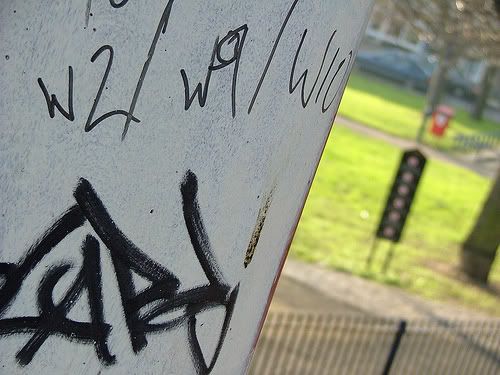
Whilst the drug dealing crews and robbers were causing casual random violence througout parts of inner London, the next generation of youth gangs were in their development. Harrow Road and Mozart prevailed as Westminster's local gang areas, however, the West End became somewhat a setting for non-local gangs. Places such as Trocadero were a draw for youth gangs from across London and in the mid-1990's reports regarding the emergence of 'Triad' street gangs began to gain momentum in the media. It was believed that young people, predominantly Asian but nonetheless regardless of ethnicity, were being recruited into criminal youth gangs by gangsters belonging to the 14K and Wo Shing Wo Triad gangs. Meanwhile, local gang rivalries had historically been ignited in schools across Westminster, sometimes because of cultural differences between youths, or because of area rivalries. In 1995, a playgorund 'tiff' later led to the murder of school headmaster Philip Lawrence in Maida Vale. Mr Lawrence of St George's School suffered a fatal stab wound whilst trying to help a young boy at the centre of a 'gang feud' that was linked to Triad influenced street gangs. Learco Chindamo was sentenced to fourteen years for the murder. Numerous stories in the media have claimed he was a member of a Triad gang, although which one depends on which article you read. No fewer than seven Triad gang names were put forward as being the gang Chindamo belonged to. They included the SW Triads, Wo Shing Wo, 14K and Venom. Soon after Learco Chindamo was released from prison he was arrested for a robbery which took place in November 2010.
A new wave of 'Yardie' violence erupted in West London by the end of the 1990's and commanded considerable media attention. Whilst the youth gangs were still active, their involvement in serious violence was far less frequent than that of the drug crews and organised criminals. Between 1998 and 2001 there were three murders linked to Chinatown's Triad groups. There was also a spate of shooting deaths. One young man from north London was shot dead outside a nightlcub following a row in Golden Square. In another incident, Jamaican born Rodney Deano Cain, a suspected drug dealer, was shot three times before he was found dead in his flat at Gloucester Terrace, Paddington. Police believe he had been killed by rival dealers and they found $5,000 buried in his garden, which they believed the killers had been looking for.

By 2006-07, when street gang culture was becoming a constant issue in the media, numerous named groups and gangs became apparent in the City of Westminster. There was still the long established Lisson Green Mandem and Bengali Green Manz. Other nearby gangs included the Edgware Road Boys, whose younger associated gang are known as Kurdz Taking Over, and the nearby Church Street estate became home to Congolese Section. Around the Harrow Road area, an allegiance of gangs emerged known as the 'Horror Road' alliance. This gang was composed of several sets including Grey Days, Street Dreams, C.R.I.M.E Set and Grimiest Movement. The Mozart estate became home to the Mozart Bloods, whilst the older generation joined a three-way allegiance known as SMG. Harrow Road and the Lisson Green areas have a long ongoing rivalry within Westminster, each group also has rivalries extending into the neighbouring boroughs such as Brent and Kensington & Chelsea (Ladbroke Grove). A report into the gang issue (Working With Men - Consultation Evaluation) in Westminster was commissioned in 2007, amongst the findings it identified that tensions often arose because of differences between various communities (black, Asian, Kurdish etc..) within local schools in north Westminster.
Since the report, the number of gangs in the borough has grown with further developments in the south west (SW1 postal district) of Westminster and also the establishment of the Maida Vale Mob in north Westminster. In SW1, several estates across this postal district make up 'Pimz Town' (Pimlico). Gangs within Pimz Town include 'Catch Them Murderers' from the Churchill Gardens estate, Page Street gang from the Regency and Millbank estates, and E-Block from the Ebury Bridge area. Since 2009, there has been a growing number of reports on gang incidents involving young people from these areas. They include stories of young people being involved in violence, stabbings and the dealing of class A drugs. Despite the increased number of gangs, and an apparent increase in violence involving the gangs of north Westminster throughout 2011, the most talked about case has been that of schoolboy Sofyen Belamouadden.
The teenagers death was one of the most publicised and frequently reported on cases of recent years. This is largely owing to the setting, a packed Victoria train station, amongst hundreds of innocent onlookers in an area covered with CCTV. The attack, which involved over two dozen youths and took place during the rush hour, saw the teen chased down and stabbed to death in the ticket hall of the station. Many of the people involved in the incident have been brought to trial for murder as a joint enterprise. All the suspects were from south London; on the 15th May 2011 two youths were convicted of manslaughter whilst numerous others faced sentences for manslaughter, violent disorder and conspiracy to cause GBH. It is believed the incident occurred after a fight was arranged on Facebook stemming from issues between groups of youths at a nearby school. The media have avoided naming the gangs involved, Sofyen was believed to be an associate of the GFL (Gangsters For Life) set from West London, a younger generation to the MDP gang.
Subscribe to:
Posts (Atom)